Work That Does Not Count
A passage from Women and Economics, on the difference between useful work, wages and economic independence.
For a certain percentage of persons to serve other persons, in order that the ones so served may produce more, is a contribution not to be overlooked. The labor of women in the house, certainly, enables men to produce more wealth than they otherwise could; and in this way women are economic factors in society. But so are horses. The labor of horses enables men to produce more wealth than they otherwise could. The horse is an economic factor in society. But the horse is not economically independent, nor is the woman. If a man plus a valet can perform more useful service than he could minus a valet, then the valet is performing useful service. But, if the valet is the property of the man, is obliged to perform this service, and is not paid for it, he is not economically independent.
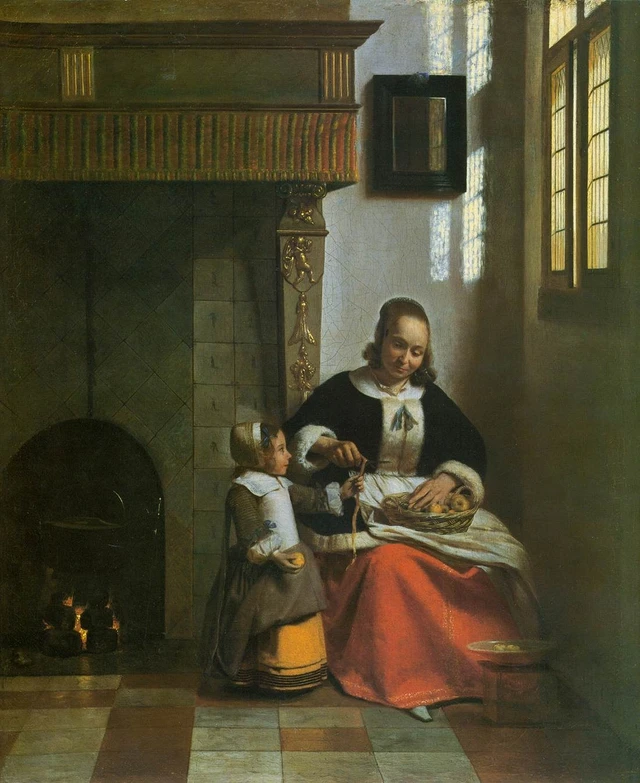
The labor which the wife performs in the household is given as part of her functional duty, not as employment. The wife of the poor man, who works hard in a small house, doing all the work for the family, or the wife of the rich man, who wisely and gracefully manages a large house and administers its functions, each is entitled to fair pay for services rendered.
To take this ground and hold it honestly, wives, as earners through domestic service, are entitled to the wages of cooks, housemaids, nursemaids, seamstresses, or housekeepers, and to no more. This would of course reduce the spending money of the wives of the rich, and put it out of the power of the poor man to “support” a wife at all, unless, indeed, the poor man faced the situation fully, paid his wife her wages as house servant, and then she and he combined their funds in the support of their children. He would be keeping a servant: she would be helping keep the family. But nowhere on earth would there be “a rich woman” by these means. Even the highest class of private housekeeper, useful as her services are, does not accumulate a fortune. She does not buy diamonds and sables and keep a carriage. Things like these are not earned by house service.
But the salient fact in this discussion is that, whatever the economic value of the domestic industry of women is, they do not get it. The women who do the most work get the least money, and the women who have the most money do the least work. Their labor is neither given nor taken as a factor in economic exchange. It is held to be their duty as women to do this work; and their economic status bears no relation to their domestic labors, unless an inverse one.