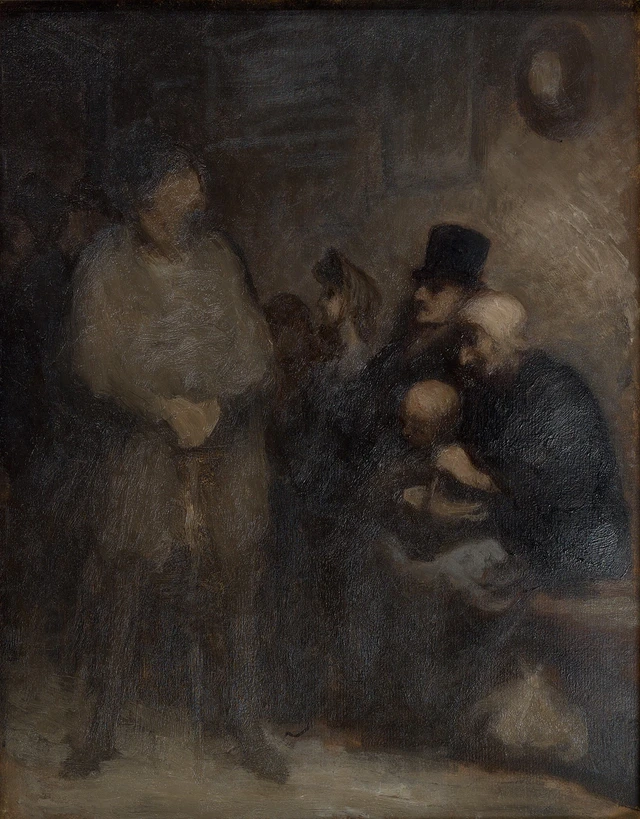
Who Gets to Make Us Wait?
The complete text of Before the Law, about a gatekeeper and a man waiting for permission to enter.
Before the Law stands a gatekeeper. A man from the country comes to this gatekeeper and asks to enter the Law. But the gatekeeper says he cannot grant him entry now. The man thinks and then asks whether he will be allowed to enter later. “It is possible,” says the gatekeeper, “but not now.” Since the gateway to the Law stands open as always, and the gatekeeper steps aside, the man bends down to look through it into the interior. When the gatekeeper notices this, he laughs and says: “If it tempts you so much, try going in despite my prohibition. But remember: I am powerful. And I am only the lowest gatekeeper. From hall to hall there are gatekeepers, each more powerful than the last. Even I can no longer bear the sight of the third.”
The man from the country had not expected such difficulties. The Law ought to be accessible to everyone and at all times, he thinks. But now, as he looks more closely at the gatekeeper in his fur coat, at his large pointed nose and his long, thin, black Tartar beard, he decides he would rather wait until he receives permission to enter. The gatekeeper gives him a stool and lets him sit to one side of the door.
He sits there for days and years. He makes many attempts to be admitted and tires the gatekeeper with his requests. The gatekeeper often subjects him to brief interrogations, asking about his home and many other things, but the questions are indifferent, the sort great men ask. At the end he always tells him again that he cannot let him in yet.
The man, who has equipped himself with many things for his journey, uses everything, however valuable, to bribe the gatekeeper. The gatekeeper accepts it all, but says as he does so: “I accept this only so that you will not think you have neglected anything.” Throughout the many years the man watches the gatekeeper almost without interruption. He forgets the other gatekeepers, and this first one seems to him the only obstacle to entering the Law.
He curses the unhappy accident, in the first years loudly and without restraint; later, as he grows old, he only mutters to himself. He becomes childish, and because his years of studying the gatekeeper have taught him to recognize even the fleas in the fur collar, he asks the fleas too to help him and change the gatekeeper's mind. At last his eyesight weakens, and he does not know whether it is really growing darker around him or only his eyes deceiving him. Yet he now discerns in the darkness a radiance streaming inextinguishably from the door of the Law.
He has little time left to live. Before his death, all the experiences of that entire time gather in his mind into a question he has not yet asked the gatekeeper. He beckons to him, since he can no longer raise his stiffening body. The gatekeeper must bend far down toward him, for the difference in their heights has changed greatly to the man's disadvantage.
“What else do you want to know now?” asks the gatekeeper. “You are insatiable.”
“Everyone strives toward the Law,” says the man. “How is it that in all these years nobody but me has asked to be admitted?” The gatekeeper realizes that the man is already at his end and, to reach his fading hearing, bellows at him: “Nobody else could have been admitted here, because this entrance was intended only for you. Now I am leaving and closing it.”