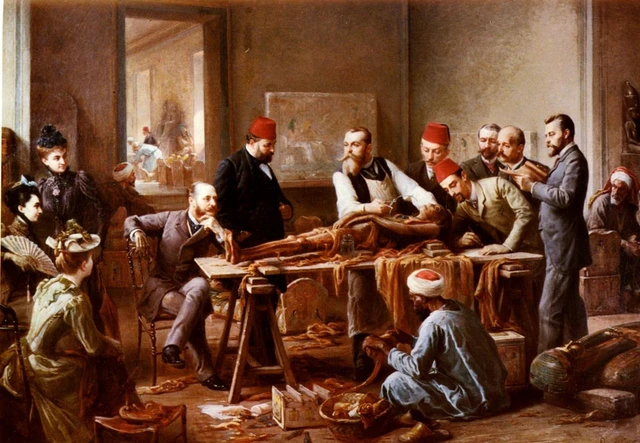
Pharaoh Is Sold for Balsams
A passage from Thomas Browne: bodies preserved for eternity, only to become merchandise.
Darkness and light divide the course of time, and oblivion shares with memory a great part even of our living beings; we slightly remember our felicities, and the smartest strokes of affliction leave but short smart upon us. Sense endureth no extremities, and sorrows destroy us or themselves. To weep into stones are fables. Afflictions induce callosities; miseries are slippery, or fall like snow upon us, which notwithstanding is no unhappy stupidity.
To be ignorant of evils to come, and forgetful of evils past, is a merciful provision in nature, whereby we digest the mixture of our few and evil days, and, our delivered senses not relapsing into cutting remembrances, our sorrows are not kept raw by the edge of repetitions.
A great part of antiquity contented their hopes of subsistency with a transmigration of their souls,—a good way to continue their memories, while having the advantage of plural successions, they could not but act something remarkable in such variety of beings, and enjoying the fame of their passed selves, make accumulation of glory unto their last durations.
Others, rather than be lost in the uncomfortable night of nothing, were content to recede into the common being, and make one particle of the public soul of all things, which was no more than to return into their unknown and divine original again. Egyptian ingenuity was more unsatisfied, contriving their bodies in sweet consistences, to attend the return of their souls. But all is vanity, feeding the wind, and folly. Egyptian mummies, which Cambyses or time hath spared, avarice now consumeth. Mummy is become merchandise, Mizraim, cures wounds, and Pharaoh is sold for balsams.