Who Ploughed the Earth Before the Plough?
Darwin on earthworms: from plugging their burrows to the soil passing through their bodies.
Worms are poorly provided with sense-organs, for they cannot be said to see, although they can just distinguish between light and darkness; they are completely deaf, and have only a feeble power of smell; the sense of touch alone is well developed. They can therefore learn but little about the outside world, and it is surprising that they should exhibit some skill in lining their burrows with their castings and with leaves, and in the case of some species in piling up their castings into tower-like constructions.
But it is far more surprising that they should apparently exhibit some degrees of intelligence instead of a mere blind instinctive impulse, in their manner of plugging up the mouths of their burrows. They act in nearly the same manner as would a man, who had to close a cylindrical tube with different kinds of leaves, petioles, triangles of paper, &c., for they commonly seize such objects by their pointed ends.
But with thin objects a certain number are drawn in by their broader ends. They do not act in the same unvarying manner in all cases, as do most of the lower animals; for instance, they do not drag in leaves by their foot-stalks, unless the basal part of the blade is as narrow as the apex, or narrower than it.
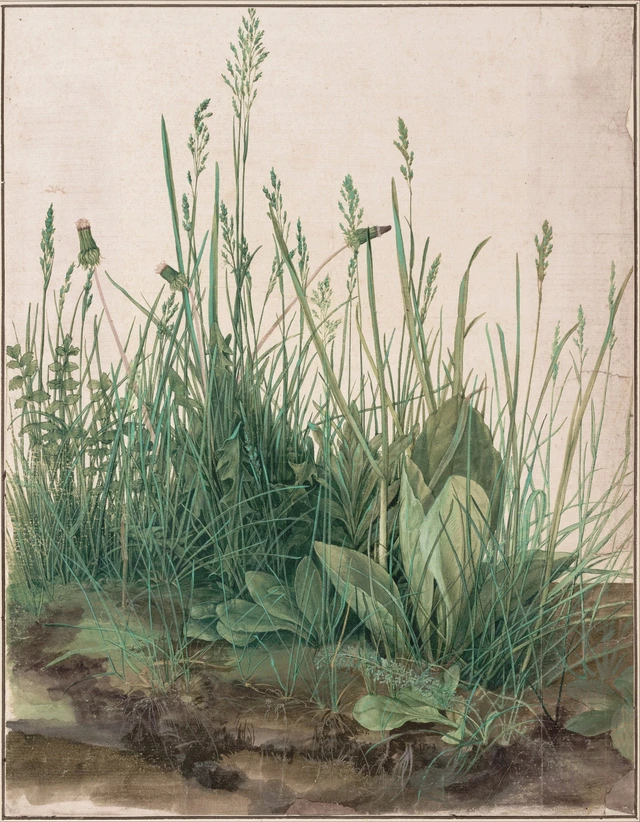
When we behold a wide, turf-covered expanse, we should remember that its smoothness, on which so much of its beauty depends, is mainly due to all the inequalities having been slowly levelled by worms. It is a marvellous reflection that the whole of the superficial mould over any such expanse has passed, and will again pass, every few years through the bodies of worms.
The plough is one of the most ancient and most valuable of man’s inventions; but long before he existed the land was in fact regularly ploughed, and still continues to be thus ploughed by earth-worms.
It may be doubted whether there are many other animals which have played so important a part in the history of the world, as have these lowly organized creatures. Some other animals, however, still more lowly organized, namely corals, have done far more conspicuous work in having constructed innumerable reefs and islands in the great oceans; but these are almost confined to the tropical zones.