Nobody Drew a Line
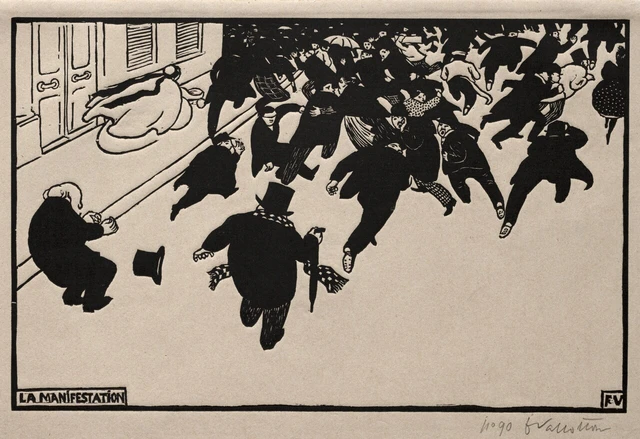
In a crowded passage, someone steps aside to pass a stranger. A few people follow, and a lane opens up.
At the end of the workday, two streams of people meet in a subway passage. Someone turns a shoulder to slip past. The person behind follows through the same gap. A few steps later, where everyone seemed to be coming straight at you, you can walk without having to keep stepping aside.
Researchers studied this in a ring-shaped corridor. Each person was told to walk in one of two directions. At first, the walkers were scattered along the corridor. Soon, people going the same way fell in behind one another. The lanes held for a while, broke up, and formed again. Sometimes a walker would step out to pass someone slower and find themselves back in the path of people coming the other way.
From above, you can see the lane. In the middle of the crowd, you might see only the back of someone who found a way through. They made room for themselves a moment ago, and here you are, slipping through the same gap without knowing their name.